Category: Philosophie


http://www.vampandtramp.com/finepress/e/Elliott-Press.html

http://www.vampandtramp.com/online-catalog/Catalog-March%202014-50%20books-around-$50/Elliott.html

Picture Source: https://www.jstor.org/stable/community.29231438?socuuid=196a0281-fe40-4a62-b84e-d4e4910cc055


Ludwig Wittgenstein quote: You can't think decently if you're not willing to  hurt...
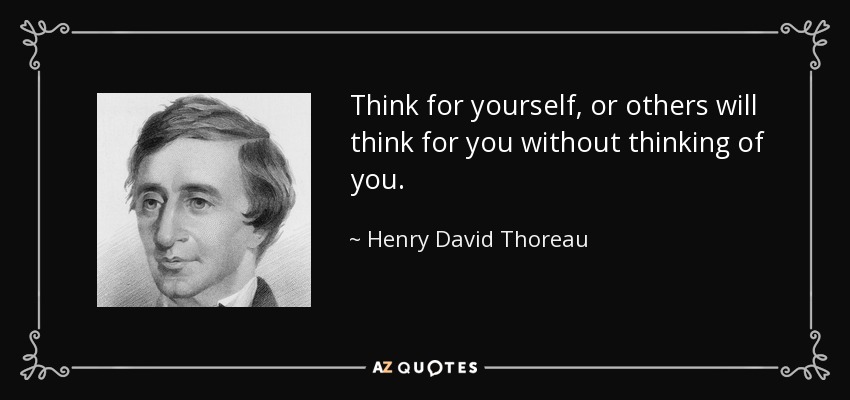
Henry David Thoreau quote: Think for yourself, or others will think for you  without...
Voltaire Quote: Think for Yourself and let Others do Same | Goalcast
Salvation is not in rituals and sacraments, but in... - StatusMind.com
People say learning philosophy serves no practical purpose. How wrong they  are - Dorset Eye
Quotes ~ Famoustes By Socrates Remarkable Photo Ideas On Life And Wisdom  Well Remarkable Famous Quotes By Socrates Photo Ideas.


https://van.atavist.com/kammerton-440-432

[…]Für die Wiener Philharmoniker schwingt der »Kammerton«, das eingestrichene A (a’), bei 444 Hertz, viele Orchester in Deutschland stimmen auf 442, manche auf 443 Hz. Wenn mit historischen Instrumenten gespielt wird, dann kann das A bei 415 (Barock), 430 (Klassik) oder 438 (Romantik) Hz liegen, das hängt von den Instrumenten – vor allem den Bläsern – ab und variiert, je nachdem, wie tief man sich in historisch-geografische Gegebenheiten vertieft, noch mehr. Generell gilt: Der Kammerton wurde im Laufe der Zeit höher gehievt. Das hat musikkulturelle Gründe, ästhetische Begleiterscheinungen und – zumindest für eine ganz bestimmte Personengruppe – gesundheitliche Folgen. In einer hochgepitchten Zeit, in der die klassische Musik ausloten muss, welche Resonanzerfahrungen sie noch erzeugen kann, sollte man die Frage, ob es Sinn machen könnte, 8–10 Hz runterzukommen, vielleicht noch einmal neu stellen.

Stichhaltige Anhaltspunkte dafür, dass Josef Goebbels in Kooperation mit den Rockefellers den Kammerton a’ auf 440 Hertz festgelegt hat, um Zwietracht und Nervosität zu säen, sind schwierig zu finden. 1920 standardisierte das US-amerikanische Bureau of Standards den Kammerton von 440 Hertz, auf Druck der BBC folgte 1939 die britische International Federation of the National Standardizing Associations. Dem schloss sich – seltsamerweise geschah das Ganze um den Beginn des Zweiten Weltkrieges herum – das Deutsche Institut für Normung e. V. an und machte die nicht-verbindliche DIN-Norm 1317-1 daraus. Zuvor waren die »Pariser Stimmung« (435 Hz) und die als »pythagoreische Sexte« bezeichnete Festlegung auf 432 Hertz beliebt und gebräuchlich.

Musizieren Sie einfach mal eine Weile auf Basis 432 Hz und hören Sie solche Musik. Sie werden feststellen, dass, wenn Sie dann wieder 440 oder höher anhören, dieses nervig ist. 432-Musik berührt mehr und fördert soziales Miteinander. Das ist der Grund, warum zum Krieg 432-Musik verboten wurde. […]


Metródoros von Chios (4.Jh. v. Chr.):
„Nego scire nos sciamusne aliquid an nihil sciamus, ne id ipsum quidem nescire aut scire nos, nec omnino sitne aliquid an nihil sit.
Ich behaupte, dass wir nicht wissen, ob wir etwas wissen oder ob wir nichts wissen, und dass wir nicht einmal diese Behauptung nicht wissen oder wissen, noch ob überhaupt etwas existiert oder ob nichts existiert.“ ( Cicero, Lucullus 73 )

Arkesílaos ( ca.315 bis 241/40 v. Chr.):

„Arcesilas negabat esse quicquam quod sciri posset, ne illud quidem ipsum quod Socrates sibi reliquisset, ut nihil scire se scieret.
… behauptete Arkesilaos, dass es nichts gebe, das erkannt werden könne, nicht einmal das, was Sokrates sich für seine Person übriggelassen habe, nämlich, dass er wisse, dass er nichts wisse.“ ( Cicero, Academici libri 1.45 )

„Bei dem Sokrates zugeschriebenen – heute geht man von einer sophistischen Quelle aus – Zitat: „Ich weiß, dass ich nichts weiß – Οἶδα, μὴ εἰδέναι “ wird die Paradoxie der Aussage verkannt. Sokrates – oder welcher Autor auch immer – gibt damit nicht in aller Bescheidenheit seine Unwissenheit kund, sondern prangert die Anmaßung an, dass man etwas wissen könne.
Denn: Wenn ich weiß, dass ich nichts weiß, weiß ich ja doch etwas, nämlich, dass ich nichts weiß.Wenn ich aber nichts weiß, dann weiß ich auch nicht, dass ich nichts weiß und kann nicht behaupten, dass ich weiß, dass ich nichts weiß. Ich weiß also nicht, ob ich etwas weiß. Wenn ich das aber nicht weiß, dann weiß ich doch, dass ich es nicht weiß usw.
Der Verstand ist also wegen seiner Selbstbezüglichkeit kein Erkenntnismittel (was sich mit den Aussagen der modernen Naturwissenschaften deckt).

http://www.uni-protokolle.de/foren/viewt/283838,0?sid=82a8a634d3e98f5347e72744344324c6.html

„Erkenne dich selbst und Ich weiss, dass ich nicht(s) weiss.)“


So you think you knew it all?! M. T. Cicero: nemo omnia potest scire

https://www.stitcher.com/podcast/gnostic-teachings/lectures-from-gnostic-teachings

„About This Show

Download free lectures about spirituality, religion, kabbalah, the Bible, Greek myth, Runes, astrology, alchemy, meditation, the Zohar, Tantra, sacred sexuality, and much more. A free public service from Glorian Publishing, a non-profit organization.

QUOTE OF THE DAY

„Tremendous is the effort and the vigilance that is needed from second to second, from moment to moment, in order to not fall into illusions. One minute of unawareness is enough for the mind to be already dreaming about something else, distracting it from the job or deed that we are living at the moment.“

Samael Aun Weor, The Revolution of the Dialectic


„What is the ‚Silver Cord‘? How is it attracted to our bodies? How is it related to the soul and consciousness of man? What occurs at death with the ‚Silver Cord‘? And why does the Order recommend between 3 to 7 days to elapse before burial or cremation? This program was presented more than 40 years ago, by The Rosicrucian Order, AMORC, as part of its public awareness program.“


Bildergebnis für hermes trismegistos


[…]In the Homeric Hymn to Hermes, the newborn god has a conversation with his mother, Maia, who is trying to scold him for sneaking out of his crib to steal his big brother Apollo’s special fancy golden cattle (that was pretty much the first item on Hermes’ to-do list after he was born). Hermes explains to Maia that he doesn’t want them (he and his mother) to stick around Olympus as “the only two among all the immortal gods without any gifts!”

Think of this version of Hermes like a lovable Trickster who starts stealing and lying and conning in order to get his mom out of the trailer park, or to pay for her cancer treatments. He’s not diabolical or cruel by nature. He is not out to hurt anyone. Sometimes people do get hurt in the course of his antics, but he usually feels bad about that, and often seeks to make reparations.[…]

read further on:

THE HERMES ARCHETYPE IN STORIES

http://mythraeum.com/the-hermes-archetype-in-stories$
Hermes as the Trickster is the archetype of pranksters, con artists, and thieves


Yeshe Tsogyal and Dzogchen Protectors

Yeshe Tsogyal and Dzogchen Protectors :

[…]This thangka, from the Khandro Thugthik or ‘Dakini Heart Essence’ cycle of the Dudjom Tersar lineage, depicts the dakini Yeshe Tsogyal with three peaceful deities above, and the three principle protectors of the Dzogchen and ‘Revealed Treasure’ or terma tradition of the Nyingma School below. The Khando Thugtik practice arose spontaneously as a ‘mind treasure’ to Dudjom Rinpoche when he was just twenty-five years of age. The main practice relates to the dakini Yeshe Tsogyal in her outer, inner, secret, and innermost secret forms, where the outer form is Yeshe Tsogyal, the inner form is red Kurukulla, the secret form is red Simhamukha (Tib.Senge Dongma), and the innermost secret form is black Troma Nagmo. These four dakini goddesses traditionally appear in the Khando Thugthik assembly, with Dudjom Lingpa, Vajradharma, and Dudjom Rinpoche in the sky above. However, in this composition the lower assembly consists of the three Dzogchen and terma protectors, Ekajati, Rahula and Dorje Legpa, who are concisely known in Tibetan as the ‘mother, planet and oath-bound trinity’ (ma gza’ dam gsum).[…]

read further:
http://www.tibetanart.com/Product.asp?PID=328&MATCH=1

[…]Dakini is a Sanskrit term, Khandro is its Tibetan equivalent, it means „Sky-Goer“. Dakinis are portrayed in female form and their male counterparts are known as Dakas. There are two types of dakinis – the Wisdom Dakini and the worldly dakini. Worldly dakinis are the ones still trapped in the cyclic existence and are found in the human and well as the celestial realms. They can take a beautiful or a demonic form. For example, the originally evil five Tseringma sisters were tamed by Guru Padmasambhava into Dharma protectors. A female practitioner who has attained some insights but not yet fully liberated from samsara is also considered to be a worldly dakini.

Wisdom Dakinis are the enlightened ones, such as Vajra Yogini, Tara and Samantabhadri. They are also portrayed as female consorts of the male Buddhas and Bodhisattvas.[…]

read further:

http://www.drukpa-nuns.org/index.php/the-heroines/the-dakini-principle

Dakinis in Tibetan Buddhism, In Japanese Buddhism and Hinduism:

[…]More interesting trivia (in point form)[/b[/color]]

1. Generic Sanskrit name for a type/group of female deities the number of which is said to be 100.000 myriad’s. They appear in both Hindu and Buddhist myths, iconography and scriptures; usually sky-clad – i.e. bare.

2. In popular Indian folklore, a dakini are regarded as semi-divine beings and is often seen as a malignant spirit, demoness or witch-like hag.

3. In Buddhist Ladakh, dakinis enjoy a much better reputation than in India. Here, for example, 500.000 of them are invited to a celebration of marriage in order to bestow their blessings and good fortune on the young couple; a custom still alive today.

4. In some cases, Dakini is the personal name of an individual goddess, as in the case of an attendant of Chinnamasta, as well as in case of the goddess ruling the Muladhara Chakra.

5. In Vajrayana, it is a designation for the wrathful and semi-wrathful female deities among the yidam. Although most of the translated literature uses the Sanskrit term – even in Tibetan texts – the Tibetan khadroma (khandro) is much more woman-positive; indicating these deities/women as females who move on the highest level of reality. Their nudity is said to symbolize the diamond-like clarity of the truth they unveil. In the Bardo Thödol, a dakini is defined as the feminine energy principle, associated with knowledge and intelligence, which may be either destructive or creative.

6. In yet other instances, dakini is used as an honorary title for an enlightened woman, a living incarnation of a goddess; and for female initiates practicing ritual sexuality. These „Female Buddhas“, as research has shown, have been very instrumental in defining and spreading the Vajrayana teachings, although the credit for this has often gone to male practitioners and/or masters.

7. In Tibet, Dakini is also a personal name.

We must certainly not be misled by those authors who simply call a dakini an ‚emanation‘ or ‚consort‘ of Buddha So-and-so. Although Buddhist Tantra ascribes a less energetic dynamism to the female pole than does Indian Tantra, the dakinis are certainly equal – if not superior – to the male deities. In the context of the Tantric teaching that enlightenment, wisdom and liberation are achieved through a fusion of method and goal, it is the goal that is seen as the female aspect (the dakini) and the method/path as the male (see Inner Tantras).[…]

read further:

https://www.dorjeshugden.com/forum/index.php?PHPSESSID=d66c1a58aec922c083fb65e19aab23fc&topic=2149.msg30397#msg30397


Alchemically Braindamaged

apotheosis as a lifestyle option

~ Meine Bienen ~

Vom Start - bis zum ersten Honig

100 Canciones

Musica callejera

DaleNorge

Norwegian quality since 1872

Leaf to Life - Diary

An educational newsletter on Naturopathic Phytotherapy, by Medical Herbalist Sebastian Liew.

Global Justice Ecology Project

Global Justice Ecology Project (GJEP) explores and exposes the intertwined root causes of social injustice, ecological destruction, and economic domination.

WordPress.com

WordPress.com is the best place for your personal blog or business site.